
How many equipment slots are there?
About seven: main weapon, off-hand or ammo, head, body, and accessories. Read the paper doll in your build if a patch splits a slot.

Dungeon Settlers equipment is a small loadout with a long material ladder. Expect on the order of seven slots (main weapon, off-hand / shield / ammo, head, torso, and accessories — exact labels vary by item). Gear climbs wooden → bone → carapace → metal (copper and friends now; tin / bronze / iron / gold on the roadmap). Weapons wear on attacks; armor wears on hits. Repair it, or the next combat pause queue is a stick fight. Dungeon Settlers from CanOpener (Steam 2798330, Early Access September 4, 2026) also weights every piece against Strength; overload is a status, not a suggestion. Verified September 5, 2026 · Steam.
You craft after research, loot deeper randomized floors, or buy from dungeon merchants. Permadeath does not drop a backup character in the same kit — broken gear on a dead member is gone with them. Pair research, resources, and skills.
| Fact | Detail |
|---|---|
| Slots | ~7 (weapon, off-hand/shield/ammo, head, body, accessories) |
| Ladder | Wooden · bone · carapace · metals (copper now; later tin/bronze/iron/gold) |
| Wear | Weapons on attacks · armor on hits |
| Repair | Camp stations / materials — do it before a deep floor |
| Weight | Vs Strength; Overloaded / Severely Overloaded slow you |
| Sources | Craft after research · loot · dungeon merchants |
| Death | Permadeath — kit dies with the member if you cannot recover the corpse |
| Build | Early Access · Sep 4, 2026 |
Matched by build plan, shared topics, and guide progression — not random related links.
Count on about seven equipment slots, not a Diablo-sized doll. Typical split: main weapon, off-hand (shield, second weapon, or ammo), head, torso/body, plus accessories (rings, bracelets, necklaces in the loot tables). Exact slot names follow the item, not a fan wiki’s doll. If an item will not equip, it is the wrong slot or a race/trait lock — do not invent a hidden eighth weapon slot.
Head and body are the two combat bars in metal form. Helmet defends Head Health; body armor defends Torso Health. A shiny greatsword with cloth on the skull is how overflow from a zero torso becomes a Near Death. Accessories are where small attack, resist, or quirk mods live (goblin jewelry, bloodstone rings in dump lists) — they still have weight.
Off-hand is a decision, not a default shield. Bow users may need the ammo slot more than a buckler. Magic users need whatever focus the tree’s nodes list. Shield-tree members who skip the shield to dual-wield a ladder they cannot use are fighting their own skills page.
Patch notes can add a slot or split ammo. Plan loadouts as “weapon, defense, head, body, extras,” then read the actual paper doll before the portal. The point of the number is: you will not solve a region by stacking fifteen uniques.
Materials are the tier list. Wooden (and bloodwood-style variants) is the starter craft and the first repair tax. Bone is the first dungeon-looking step — you only get it if expedition actually brings bones home. Carapace is the bug-shell rung: same story, different monster family, different resources page. Metals start where your research and ore allow; copper-era gear is the current EA conversation, with tin, bronze, iron, and gold called out on later updates.
Prefixes show up on weapons, arrows, and shields together. Upgrading only the greatsword while the helmet stays wood is how Head Health dies first. Upgrading only armor while the weapon stays wood is how fights take too many hits — and armor wears on those hits. Climb the ladder in pairs: the tool that attacks and the plates that get attacked.
Arcron and other dungeon-named mats sit beside the simple ladder. Treat them as region-gated specials, not as a reason to skip bone. If depletion has thinned a region (TBA numbers on expedition), you may buy a rung from a merchant instead of farming a −50% floor.
Weapons lose durability when they attack. Armor loses durability when it is hit. That split is the whole maintenance model. A bow that kited cleanly stays healthier than a greatsword that traded every swing. A shield-provoke tank’s armor is a consumable. Pause combat does not pause wear — each committed animation and each enemy connect still ticks the bar.
Zero durability is a combat event. The skill you queued still expects a greatsword; a broken greatsword is not a greatsword. Repair before the floor where you cannot afford a pause spent on “why did damage collapse.” Do not treat shops as infinite repair kits unless you packed the mats and the weight.
Quality and material change how fast bars drop; exact hit-to-break tables are TBA here until a local extract is wired. The playable rule is enough: inspect durability in camp like you inspect Head Health in pause.
Repair at settlement stations with the matching materials — the same ladder you crafted from. Research unlocks the bench; settlement has to actually place it indoors. Task Planner queues repair next to craft. Members only see mats in their pack, storage, or the floor — an item stuck in another colonist’s inventory is not a repair ingredient.
Do the repair before the portal, not after the first elite. Dungeon time is Dungeon Stay; Stay is Mood; Mood is Mental Collapse. Spending a day underground hunting a repair mat you could have queued at camp is how “winning” fights still ruin the party.
If a merchant sells a replacement cheaper than a repair-plus-mat haul, and you have Strength left, buy the replacement. If they sell junk that duplicates a researched recipe, walk away. Repair policy belongs next to food policy: do not let Auto-consume eat the last repair kit in a trash room.
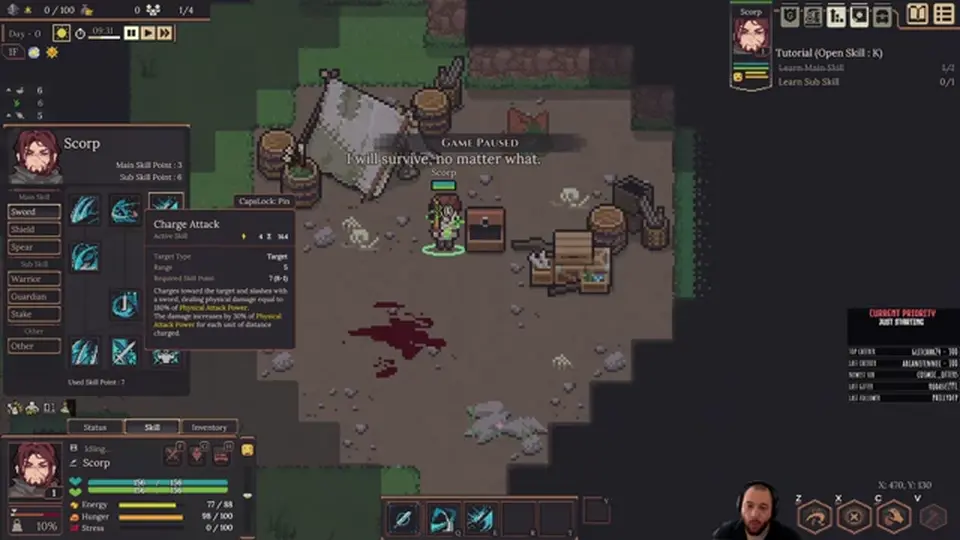
Every item has weight. Strength raises carry cap (and physical attack, mining, woodcutting). Cross the line and you become Overloaded, then Severely Overloaded: move speed and related penalties. That is a combat status as much as a packing status. A tank who provoke-queues while Severely Overloaded does not reach the mage in time.
Expeditions fail the extract when loot plus metal armor plus ammo exceeds the walk back. Leave a buffer. Bones, clay, carapace, and ore are why you entered; they need kilos that were not spent on a third accessory. Weight potions exist in item dumps — treat them as emergency valves, not as a license to ignore Strength.
Hire Strength talent when the member’s job is haul or melee. An Intelligence mage can wear light ladder rungs and still need a friend to carry the carapace. Party weight is a four-person spreadsheet you feel when the portal room is ten tiles too far.
Returning members dump on the ground. Storage buildings haul categories automatically. You cannot stuffed-click a backpack into a crate; drop first. If repair mats sit in a fighter’s pack at the statue, the crafter at the bench does not see them.
Craft after research is the repeatable ladder. Loot is the spike: a named drop, a chest, a lucky merchant. Buy is the gap-filler on a randomized floor. A healthy colony does all three. A desperate colony buys because depletion or Stay said the farm is too expensive today.
Research nodes unlock recipes and buildings; clan rank can gate nodes. If the anvil does not list the carapace helm, you are not “bad at crafting” — you are missing a node or a mat. Check research before you restart a floor for a helm that is a tech away.
Merchants (a small set in data dumps) rotate stock. Price versus craft cost is a judgment: arrows and repair mats are good buys; a full metal set you can bench next week is a weight trap. Loot tables are per enemy and region — use resources to see which floor even drops the mat, then run a short expedition instead of a Stay-max clear.
Main skills expect the matching type. Sword nodes want swords. Shield nodes want a shield in the off-hand. Bow nodes want a bow, and ammo-taxed shots want arrows in the ammo slot. Equip first, spend Main SP second. An inscription that adds a tree is an IOU until you craft or loot that weapon type.
Durability interacts with that lock: a broken required weapon is an unequip in slow motion. Repair is skill uptime. Material ladder interacts too: a wooden spear on a Spear specialist is still a Spear specialist, just a weak one — better a wooden match than a metal mismatch.
When a member dies, permadeath removes their trained trees. Recovering the corpse recovers the metal; it does not recover the SP. Kit the living replacement from storage, do not wait to “find another legendary” on a depleted floor.
Farm the mats on resources, unlock benches on research, and spend them on trees from skills. Repair before the next expedition.
About seven: main weapon, off-hand or ammo, head, body, and accessories. Read the paper doll in your build if a patch splits a slot.
Wooden, then bone, then carapace, then metals. Later updates add more metals. Climb weapon and armor together.
Weapons wear when they attack. Armor wears when it is hit. Repair at camp before a deep floor.
Craft after you research the recipe, loot them on deeper randomized floors, or buy from traveling dungeon merchants.
Weight versus Strength. Overloaded and Severely Overloaded cut move speed. Leave carry room for loot.
Main skills usually need the matching equipment type. Equip the spear (or whatever the node lists) or the hotbar will not do the job.
The member is gone. Recover the corpse if you can; otherwise the kit is gone with them. There is no revival.
Matched by build plan, shared topics, and guide progression — not random related links.